DEI leaders are sustaining momentum in the face of evolving challenges.
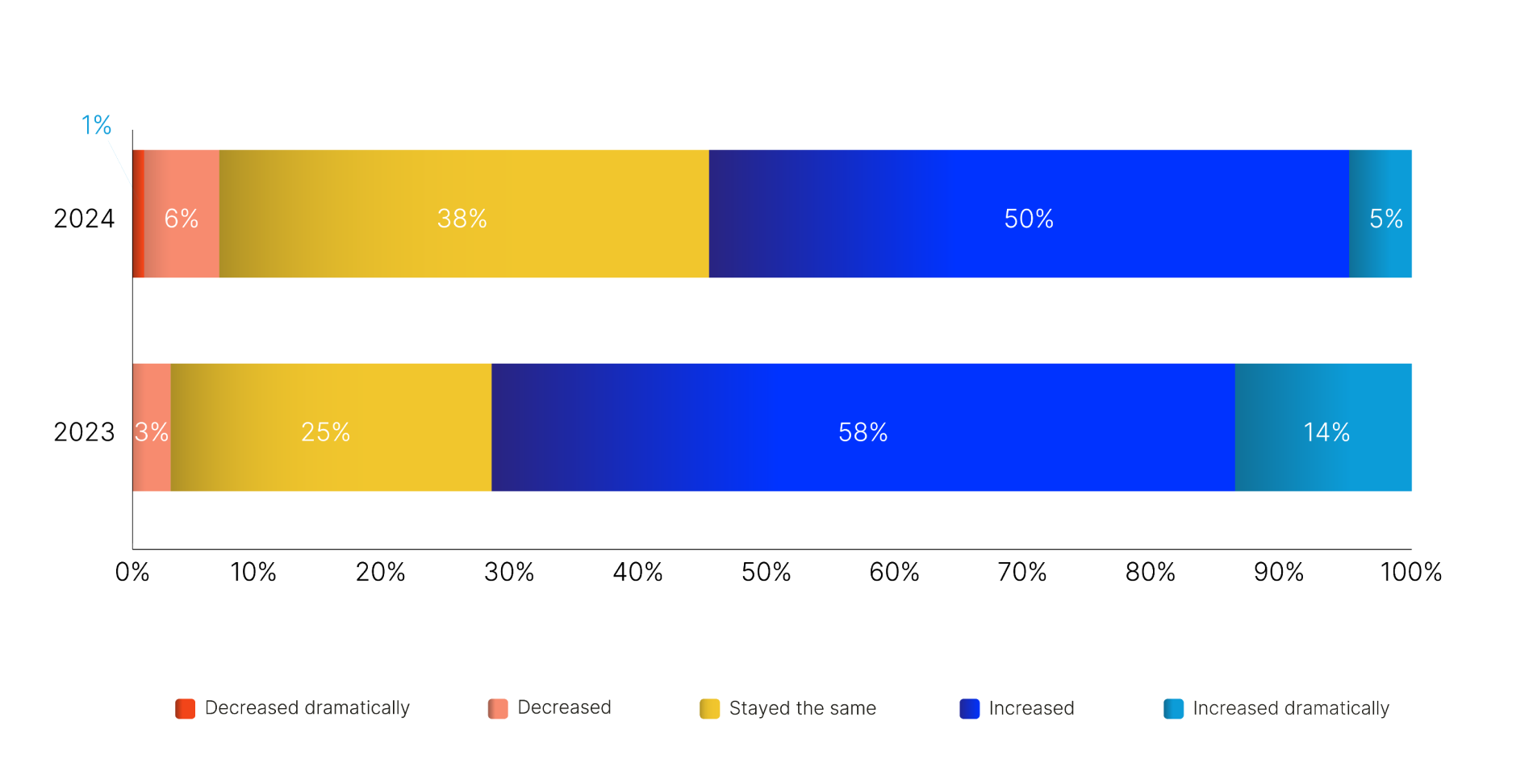
The DEI landscape is shifting, but companies are steadfastly maintaining their courses. Of respondents, 55% reported a surge in momentum in the past year, while 38% indicated that their momentum remained consistent—a notable 13% increase from 2023. This trend aligns with the maturation of DEI organizations. This year, 19% of respondents believed that their organizations had high maturity—up from 12% in 2021—and 65% believed they were at medium maturity—down from 83% in 2021. Notably, 59% of organizations with revenues of more than $50 billion reported increased momentum within the past year compared to those with revenues lower than $50 billion, which reported an average increase in momentum of 49%.
One statistic to note: Respondents from non-U.S.-based companies saw a 75% increase in momentum compared to 51% of U.S.-based companies, indicative of the political and social climate in the U.S.
In your opinion, over the past 12 months, momentum for inclusion and diversity initiatives at your organization has:
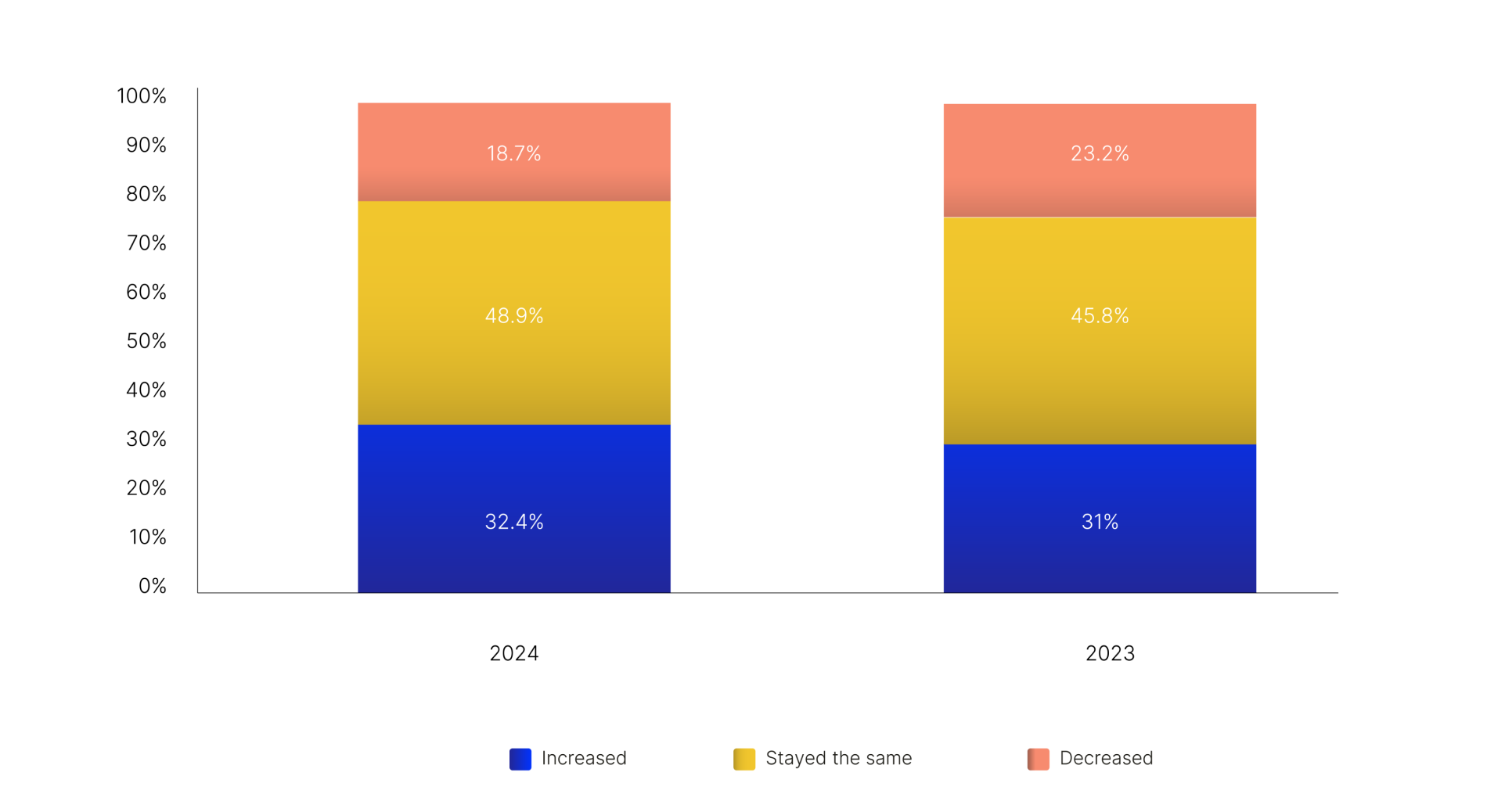
It’s not just the momentum that’s holding; most leaders also feel they have the necessary financial and human resources to meet their goals. Over the past three years, respondents have consistently thought they had an adequate budget to support their strategy, with 2024 marking the highest level in confidence. A significant 69% of respondents believed they had an ample budget for the year, and 81% of respondents indicated that their budget had either increased (32%) or stayed the same to meet their goals (49%). Another positive sign is that of the 46% whose budget remained the same, 76% of them agreed that it was sufficient to support their strategy. This reassurance about the adequacy of resources should instill confidence and security to move initiatives forward.
Over the past 12 months, has the budget available to your inclusion and diversity team or function increased, decreased, or stayed the same?
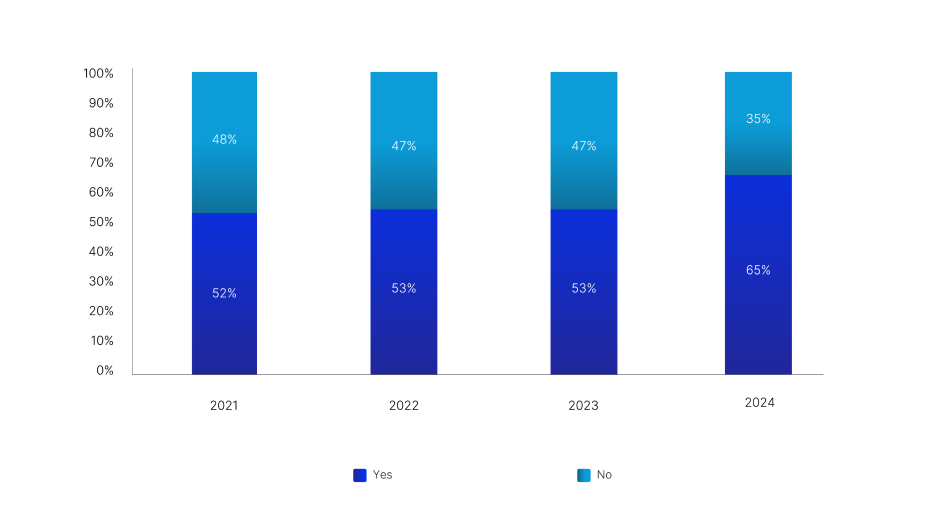
This year, a more significant portion (12%) of respondents were happy with the size of their teams—from 53% in 2023 to 65% in 2024—especially considering team sizes have remained consistent for the past two years. One significant difference is that team sizes doubled for companies with revenues over $50 billion since 2022—from six to 11—likely to accommodate the organizations’ growth and to sustain their DEI efforts. In addition to full-time employees, the impact of employee resource groups also factors into the perception of team size.
Does your organization have sufficient talent resources to meet its stated inclusion and diversity goals?
“The continued stress in the world places an extraordinary amount of pressure on organizations about what to focus on and how to focus. This tension can take up all of our energy, and, in many ways, leads to inaction. When we pause and recognize the impact of DEI on performance, on culture, and on our people, it is continued proof that what we’re doing matters. A focus on DEI changes the lives of our employees, our customers, and creates a deep sense of belonging. The stories of impact, connection, innovation, and possibility are what we need in the world.”
“The continued stress in the world places an extraordinary amount of pressure on organizations about what to focus on and how to focus. This tension can take up all of our energy, and, in many ways, leads to inaction. When we pause and recognize the impact of DEI on performance, on culture, and on our people, it is continued proof that what we’re doing matters. A focus on DEI changes the lives of our employees, our customers, and creates a deep sense of belonging. The stories of impact, connection, innovation, and possibility are what we need in the world.”
