
Influence, CEO engagement, and clear metrics are crucial to driving accountability across the organization.
Sustained momentum for DEI efforts only happens with consistent commitment from the top. Year over year, leaders have stated the importance of having the board, CEO, senior leaders, and managers at the forefront as DEI ambassadors and strategic partners in the company—and this still rings true.
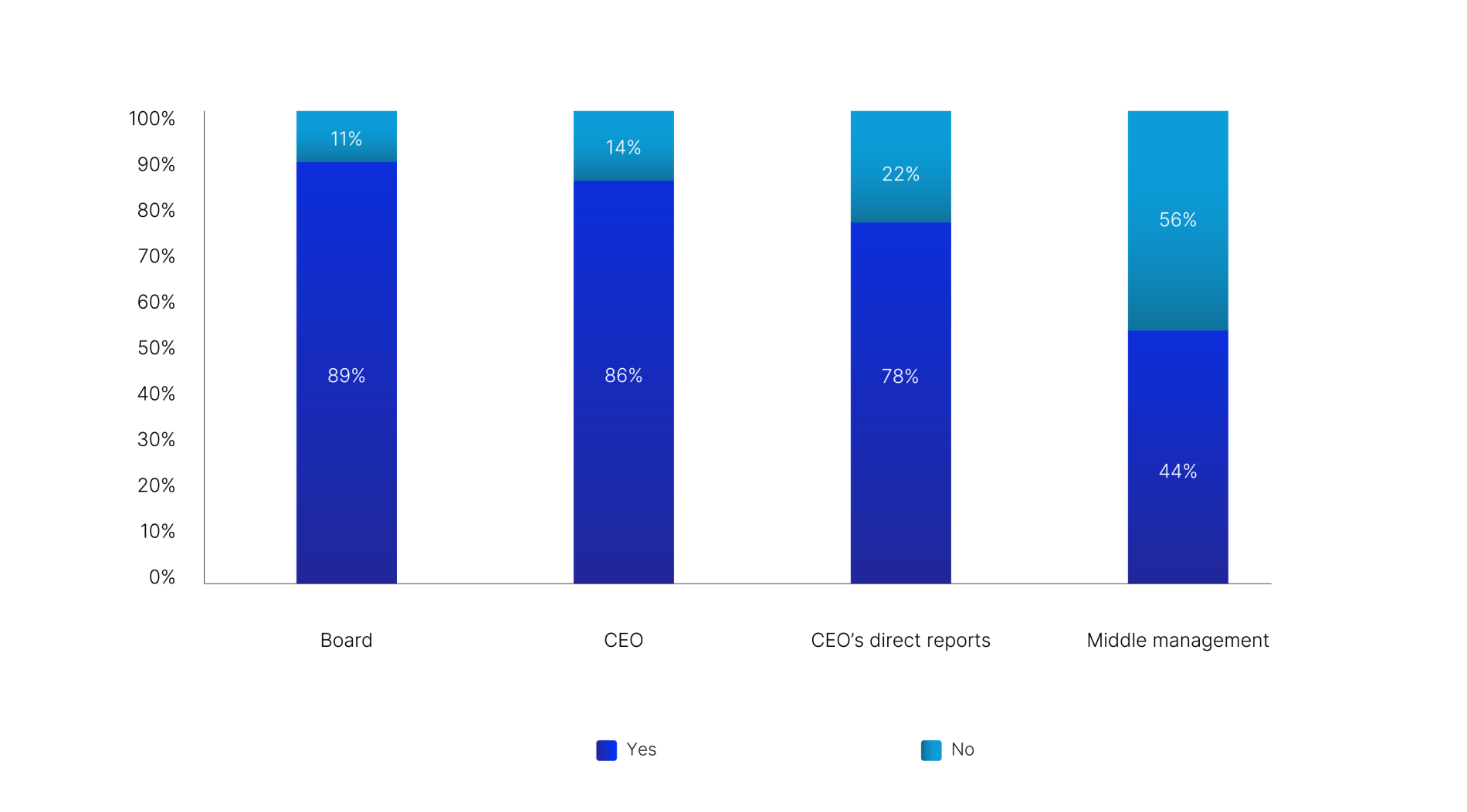
According to survey results, respondents felt they had the support needed to drive their efforts internally from senior leadership: the board (89%), the CEO (86%), and direct reports to the CEO (78%). Compared to last year, board-level support remained consistent, but the support of CEOs and their direct reports has declined by 6% and 5%, respectively. One member pointed out that the level of visibility with the board and CEO after the killing of George Floyd has changed dramatically for them. Still, it’s in correlation to the needs of the business overall—not the importance of the work. They said, “My first year, I was in every board meeting to talk about DEI. Now, I go to board meetings maybe once a year. The engagement has changed, but the work is still happening. If things are on track based on our strategy and our commitments, there doesn’t tend to be the need for a lot of conversation.”
Do you feel that your team or function is adequately supported internally by the following leadership groups?
Even though the amount of visibility has changed, the support of the CEO is still paramount in driving the DEI strategy. Sandra Cushnie—global leader of diversity, equity, and inclusion at the Canadian multinational frozen food company McCain Foods—believes the CEO creates a domino effect of support that cascades down into the organization. McCain’s CEO—whom Cushnie does not report to—and Cushnie are co-chairs of the global DEI council, which meets quarterly. She presents to the board twice a year on DEI progress. Cushnie said, “I started with the most senior leaders in our organization because I believed that people needed to be able to see active role models and that the organization believes in DEI. I didn’t think we would be as successful starting anywhere but at the top.”
What inclusion and diversity metrics do you report, and to whom?

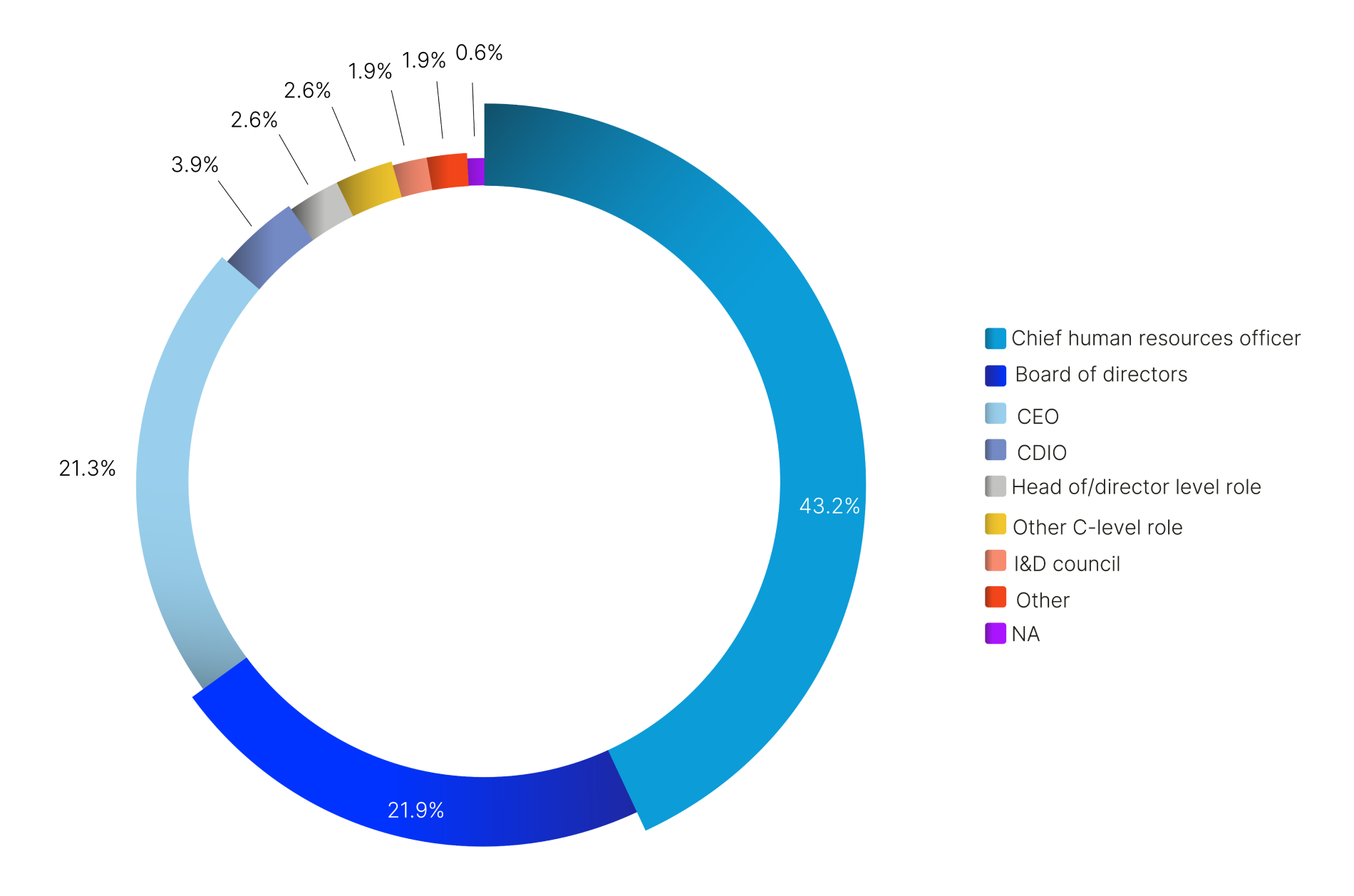
Of respondents, 43% said the chief human resources officer is ultimately responsible for delivering on DEI metrics, followed by the board (21%), and then the CEO (21%). The metrics varied based on the stakeholder, but most respondents shared these top three metrics with the CHRO, CEO, and the board: employee representation, leadership representation, and employee inclusion and belonging. There was an interesting spike in the number of respondents who reported on awards and recognition received for their DEI achievements to the board: 85% of respondents shared external recognition received with their company’s directors, compared to 64% with the CHRO and CEO for the same metric.
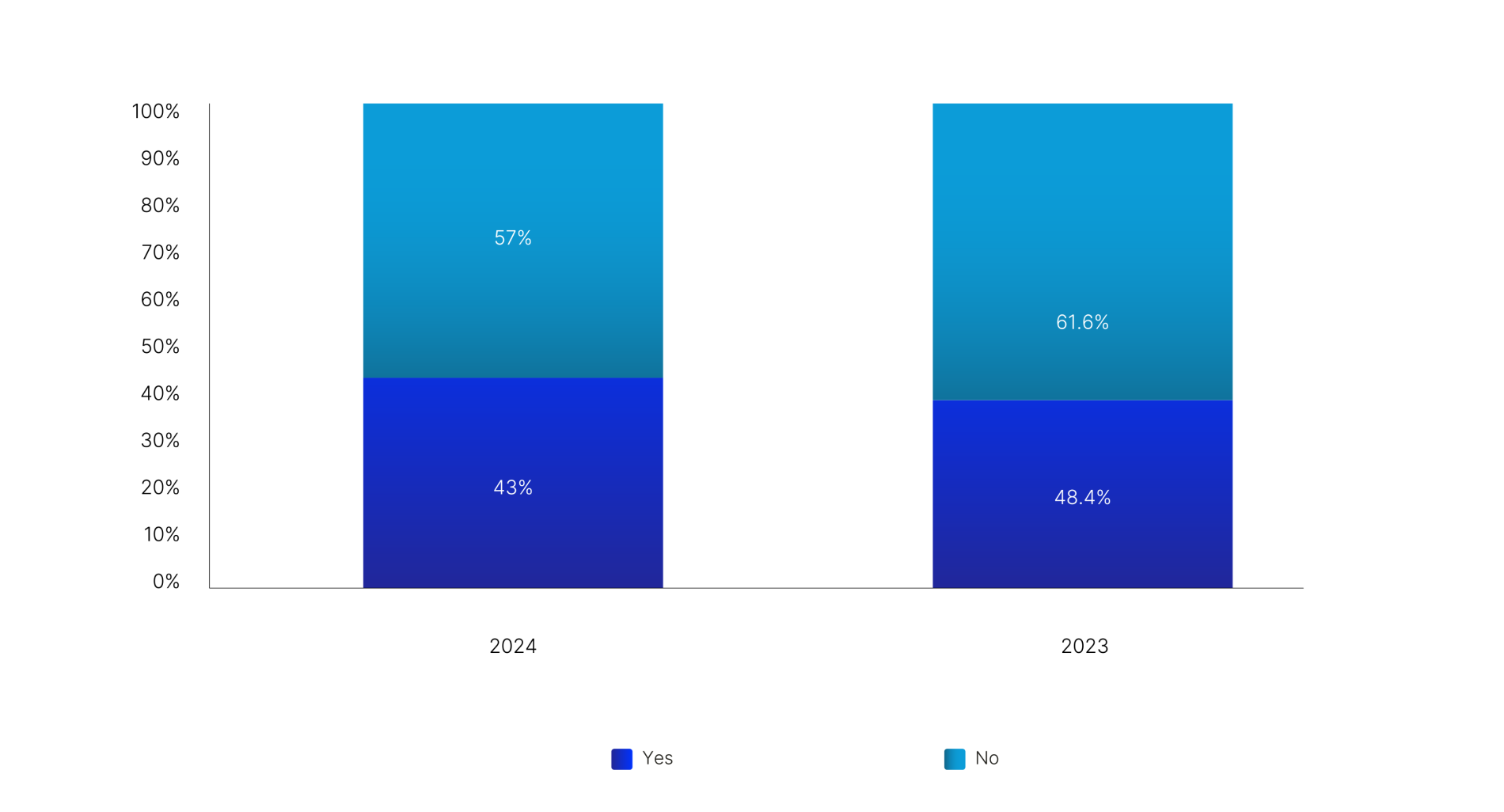
Of respondents, 81% felt they had the internal influence necessary to drive progress on DEI in their organizations, while only 43% of respondents felt leaders across the organization were effectively held accountable for delivering DEI results. In organizations where DEI members felt internally supported by middle management and senior leaders, the sentiment on effective accountability jumped to 60%. This significant lift highlights the importance of bringing middle management along on the journey.
Do you think leaders across your organization, excluding yourself and your team, are effectively held to account for delivering inclusion and diversity results?
“We’ve spent a lot of time deconstructing what ‘the frozen middle’ means. It essentially means you’re disconnected from whatever the purpose and/or mission is, or you feel as though you’re not empowered. We spend a lot of our time communicating that inclusion is everybody’s role. Every single person has to do their part.”
“We’ve spent a lot of time deconstructing what ‘the frozen middle’ means. It essentially means you’re disconnected from whatever the purpose and/or mission is, or you feel as though you’re not empowered. We spend a lot of our time communicating that inclusion is everybody’s role. Every single person has to do their part.”

– DeShaun Wise Porter, Vice President, Diversity, Inclusion, and Engagement, Hilton
There was a 3% increase in support from middle management, indicating that some DEI leaders are gaining traction with the layer often called “the frozen middle.”
Building relationships that lead to social capital is a big part of engaging middle managers. “Business moves at the speed of trust,” said Gloria Goins, chief diversity, equity, and inclusion officer at Cisco. “A DEI leader’s job is to speak the truth with power. Power is trust. Power is credibility. Power is social capital. Your job is to have trust, and then move the needle.”
Gaining trust starts with meeting middle managers where they are and helping them understand the practical application of DEI and how it can be ingrained in day-to-day business activities. At a meeting, Celeste Warren, vice president of the Global Diversity and Inclusion Center of Excellence at Merck, surveyed the top 200 company leaders. They admitted that if asked, their managers would not have a consistent answer to what was expected of them regarding DEI efforts. With that knowledge, Warren communicated clear objectives and how to implement them with middle managers: “From staff meetings to one-on-ones, we encourage managers to integrate DEI seamlessly, starting with a simple, ‘How are you doing today?’ They already have conversations; we elevate those discussions by embedding DEI into them.” There is confirmation that this approach works for Merck. In the past two employee opinion surveys, the statement, “My manager actively supports DEI and my work team,” received the highest rating of all sentiment questions.
“Creating an inclusive environment is essential to retain employees. High turnover can be avoided by effectively managing and cultivating an environment that values diversity and inclusion.”
“Creating an inclusive environment is essential to retain employees. High turnover can be avoided by effectively managing and cultivating an environment that values diversity and inclusion.”

– Celeste Warren, vice president of the Global Diversity and Inclusion Center of Excellence, Merck
As evidenced at Merck and shared by other respondents, leadership accountability coupled with solid employee engagement positively impacts middle management’s level of support of DEI efforts. Karine Vasselin, group diversity and inclusion lead at Capgemini, put it this way: “I like the image of steeping a teabag. You put the teabag in the water, and progressively, it infuses more and more, then changes the color. I think that this is an effective way to look at DEI. We reach a larger employee audience and more leaders internally progressively by infusing the way they operate and the way they perceive this as a necessity from a business and talent perspective.” This approach takes a bit longer, but it may have a lasting impact on changing the company’s culture.
Case Study
Sodexo: Three Checks for Inclusion
Sodexo, a French food services and facilities management company, employs a “three checks for inclusion” strategy to enhance awareness of DEI within the organization. At least once a week, site managers discuss DEI with their teams, posing a concise set of questions, such as: “Am I fostering inclusivity? Do you feel a sense of belonging? Am I aware of my biases?” Using these straightforward inquiries is a practical method to involve middle managers in DEI efforts. In 2015, Sodexo introduced a similar strategy called “three checks for safety,” which gradually improved workplace safety. Drawing from this success, Sodexo implemented onsite inclusion checks, providing managers with training and support to facilitate these conversations and create a conducive environment for them to take place.